


4-20 mA current output for Arduino Uno
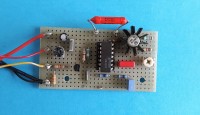
The purpose of this project is to provide a 4-20 mA output from a PWM signal generated by a microcontroller. One of the more interesting applications of this circuit would be to replace or to realize a smart sensor with Arduino.
Arduino Uno, or systems based on the ATmega328 chip has no a true analog output. The easiest way is to use one of the PWM outputs and filter the signal with a passive RC filter to obtain an analog signal proportional to the duration of the pulses. This expedient creates a considerable noise due to the frequency of the PWM itself. To eliminate the noise I used a second order active low-pass filter, Sallen-key type. The frequency of the Arduino PWM (with 16 MHz clock) on pin 9 is about 490 Hz, so I used a very low cutoff frequency (11 Hz) but with a bandwidth sufficient for the majority of industrial controls.By connecting the filter directly to the PWM output is obtained a signal which varies from 0 to 5 V which would give an output current of 0 to 20 mA. The pulses duration is programmed with a word of 8 bits, losing 1/5 of the full scale. To improve the current resolution from 20/255 to 16/255, I modified the minimum amplitude of pulses from 0 to 1 volts, giving at the output a 4 to 20mA current.
Want to build a project?
Bring your design to life with the Elektor PCB Service, powered by Eurocircuits. Upload the project files and order professionally manufactured PCBs or assembled boards through a proven European production platform.
Supporting KiCad, Eagle, Gerber, and ODB++ formats, the service is suitable for everything from prototypes and validation builds to series production and volume manufacturing.
Made in Europe. Fast. Reliable. Professional.
Discussie (0 opmerking(en))